
Daniel Osborne, Features Reporter.
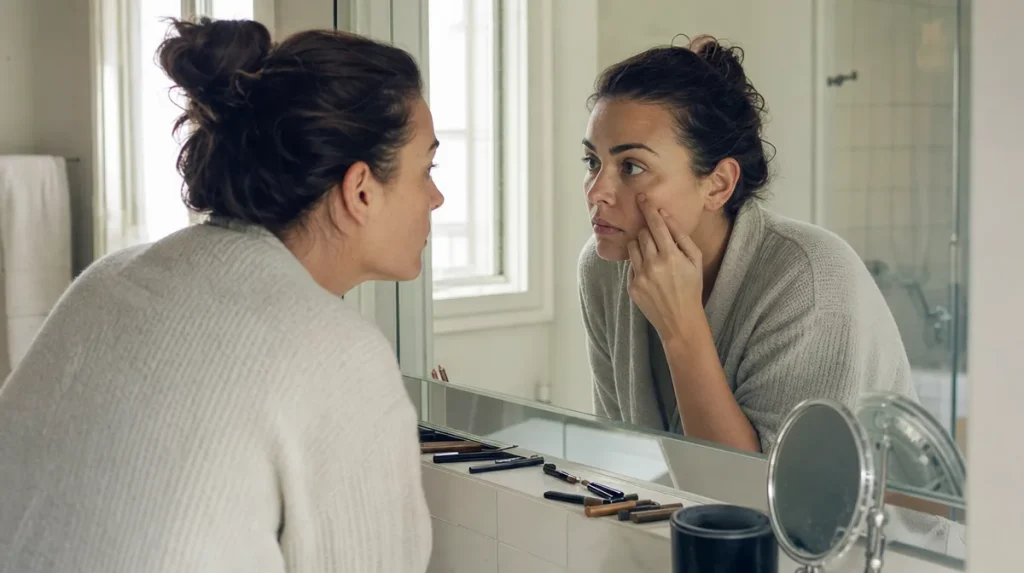
You know the moment. Half past seven, bathroom light doing its worst, and the liner from last night has migrated somewhere under your eye that has nothing to do with your eye shape. The drawer behind you holds four other liners in the same state: two pencils, a gel, a felt-tip, all bought on a promise of lasting through a wedding, a shift, a hot commute. Most of them didn’t. The frustrating part is that nothing on the packaging told you which one would hold and which one would slide. Long-wear claims are tested in a lab, but the test that matters to you happens on your own face, in your own climate, against your own skin oil and blink rate. There is a way to read a liner before you buy it, and a way to judge it fairly once you own it. Neither takes more than a few minutes, and both save you the drawer full of almost-right pens.
- Film-forming ingredients, not pigment, decide wear time: the polymers near the top of the ingredient list do more work than the colour itself.
- The waterline is the real stress test: a liner that survives eight hours on the lash line can still fail within an hour on the waterline, where it is warmer and wetter.
- Removal difficulty is a performance signal, not a flaw: a liner that comes off in one gentle pass was rarely built to survive a full day in the first place.
Reading The Word ‘Long-Wear’ Before You Read Anything Else
“Long-wear” is not a regulated term in cosmetics, so two liners can carry the same words on the box and behave nothing alike. What actually determines staying power is a small group of film-forming ingredients, usually polymers or resins, that sit near the top of the ingredient list. Once applied, they dry down into a thin, flexible film rather than staying as a wet, movable paste. Think of the difference between wet paint and cured paint on a fence post: wet paint transfers onto anything that brushes past it, while cured paint has formed a skin that resists smudging even in rain.
A 2020 study in the International Journal of Cosmetic Science measured transfer resistance across several eye cosmetic formulations and found that products with higher concentrations of film-forming polymers showed markedly lower pigment transfer onto a cotton pad after four hours, compared with formulas that relied mainly on wax and pigment. The practical takeaway: scan the first five to seven ingredients. If you see names ending in “-mer” or “-siloxane” near the top, the formula has been built for durability. If the list opens with waxes and oils and pigment appears early, it is likely built for colour payoff first and wear time second.
Self-test: draw a line on the back of your hand, wait sixty seconds, then rub gently with a fingertip. A film-forming formula resists smearing almost immediately. A wax-based one will still move.
Why The Waterline Gets Checked First, Not Last
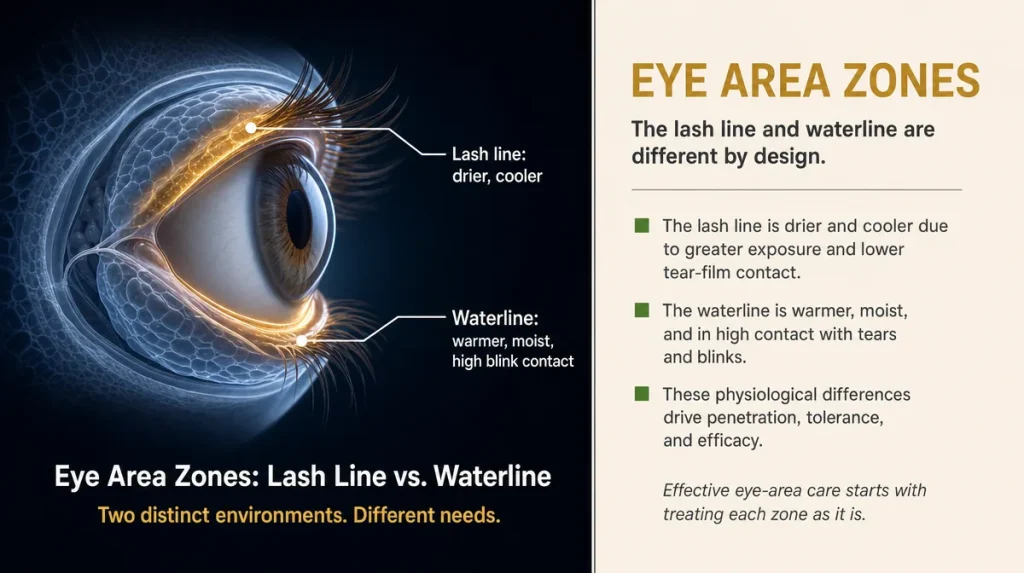
Specialists assessing eye cosmetics tend to start at the waterline, not the lash line, because it is the hardest environment a liner will ever face. The waterline sits directly against the eye’s tear film, is naturally warmer than the surrounding skin, and gets washed by blinking roughly fifteen to twenty times a minute. A formula that performs beautifully along dry lash-line skin can dissolve within the hour once it meets that much moisture.
The Australasian College of Dermatologists’ general public guidance on cosmetics near the eye area recommends patch testing any new product on the inner forearm before use near the eyes, given how much more reactive and permeable the skin and mucosa around the eye can be. This is sound advice for long-wear formulas in particular, since the same polymers that create durability can also feel drying or irritating to some users when applied repeatedly to delicate tissue.
When you’re assessing a liner for waterline wear, don’t judge it on the first application. Judge it at the two-hour mark, when normal blinking and any watering from wind or air conditioning have had a chance to test the film. A liner that has only smudged slightly by then, rather than disappeared into a grey shadow, has genuinely earned a long-wear claim.
Working Through The Ingredient List Like A Specialist Does
Most buyers read an ingredient list looking for what to avoid. Specialists read it looking for what is doing the actual work. On a long-wear eyeliner, that means three things in order: the film-formers already mentioned, a suspending agent that keeps pigment evenly distributed rather than settling into a paste, and a plasticiser or emollient that keeps the finished film flexible so it doesn’t crack and flake off in small dark specks by mid-afternoon.
A formula with strong film-formers but no plasticiser is like a fence painted with a hard varnish and no flex coat underneath: it holds for a while, then chips.
Pigment load matters less to wear time than people assume. A deeply pigmented liner with a weak film will still fade evenly rather than flake, which some users mistake for good performance when it is really just gradual colour loss. The more telling sign of a well-built formula is that it wears thin and even, rather than patchy, by the end of the day.
If an ingredient list is hard to find on the packaging or the retailer’s page, that alone is worth noting. Consumer body CHOICE has long encouraged shoppers to expect full ingredient disclosure on cosmetics sold in Australia, and a brand that makes this information difficult to locate is not giving you the tools to judge its own claims.
Running The Smudge Test Before You Buy
You don’t need a lab to get a rough read on wear time before you commit to a full-size product. Most counters and pharmacies allow testing on the back of the hand, and a few extra steps turn that into something closer to a real assessment.
Draw a line, let it sit for two full minutes rather than the usual few seconds, then press a tissue against it firmly rather than wiping. A liner built for wear should leave only a faint trace on the tissue. Next, run a fingertip lightly across the line after it has dried. Genuine long-wear formulas resist this; formulas leaning on wax alone will streak.
A final, often skipped check: expose the swatch to a small amount of water, either from a damp fingertip or a light spritz, and watch how it behaves. This roughly simulates watering eyes or humid weather. A formula that beads the water and holds its line has a genuine water-resistant film. One that streaks or lightens noticeably is unlikely to survive a warm commute or an outdoor event, regardless of what the label promises.
These are rough proxies, not laboratory conditions, but they take under three minutes and tell you more than the marketing copy on the box.
Removal Is Half The Formula, Not An Afterthought
It’s tempting to treat easy removal as purely a convenience feature, separate from wear performance. In practice, the two are linked. A liner that comes away with a single swipe of a regular cleanser was almost certainly not built with a strong film-forming system, because those same polymers that resist smudging during the day also resist plain water and mild cleanser at night.
This is not a flaw to avoid, it’s a trade-off to expect. A genuinely long-wearing formula usually needs an oil-based remover or a dedicated bi-phase formula to break down the film without heavy rubbing. Skin around the eyes is thinner than skin almost anywhere else on the body, and repeated rubbing to remove a stubborn liner is a more realistic cause of irritation or premature fine lines than the liner’s ingredients themselves.
A sensible removal routine: a cotton pad soaked in an oil-based remover, held against closed eyes for ten to fifteen seconds before wiping, rather than immediate rubbing. If a liner regularly leaves faint pigment on your pillow the morning after using a proper remover, that’s a sign the film wasn’t fully broken down, not that your skin has failed to try hard enough.
The Application Habits That Undo A Good Formula
Even a well-built long-wear liner can fail early because of how it goes on, not what it’s made of. The most common mistake is applying it over an oily lid without any base. Oil breaks down film-forming polymers before they’ve had a chance to set, so a liner applied straight onto bare, naturally oily lid skin can slide within a few hours regardless of its formula.
A thin layer of setting powder or a light eyeshadow base under the liner gives the film something drier to grip and cure onto, similar to the way a primer coat helps paint hold to a slightly uneven wall rather than a bare one.
The second common error is not allowing enough drying time before blinking normally or applying mascara. Film-forming liners typically need thirty to sixty seconds to set fully. Rushing that step, especially with gel or liquid formulas, transfers wet product onto the upper lash line or smears it before the film has cured.
Finally, heavy-handed application doesn’t equal longer wear. A thick layer takes longer to dry and is more prone to cracking once it does, since the film has further to flex. A thin, even line that’s built up in two light passes generally outlasts one thick pass.
Separating Real Performance Claims From Packaging Language
Phrases like “24-hour wear” or “budge-proof” describe laboratory conditions, usually a controlled environment without the heat, humidity, sweat, or eye-rubbing that a normal day involves. That doesn’t make the claim false, but it does mean the number on the box is closer to a best-case scenario than a guarantee.
More useful language to look for includes specific claims about water resistance, transfer resistance, or wear tested under named conditions, since these describe an actual test rather than a general boast. Beauty coverage in outlets such as beautyheaven often flags this distinction in its reader reviews, where real-world wear time reported by everyday users can differ substantially from the claim printed on the packaging.
“Waterproof” and “water-resistant” are also not interchangeable, even though they’re often used loosely. Water-resistant formulas typically hold up to light moisture, tears, or humidity, while true waterproof performance, relevant for swimming, is a higher bar and less common in everyday long-wear eyeliners than the label suggests. If a claim matters to your specific situation, such as an outdoor summer wedding, it’s worth testing the product under conditions closer to that scenario rather than trusting the general wording.
Judging Your Own Results Over The First Two Weeks
A single good or bad day with a new liner tells you less than two weeks of ordinary use. Skin oil production, humidity, and even seasonal changes affect how a formula performs, so specialists assessing wear tend to look at patterns across repeated wears rather than one outing.
A fair personal test: wear the liner on at least four separate days across two weeks, ideally including one warmer or more humid day, and note roughly when you first notice smudging, fading, or flaking, not just whether it eventually happens. A formula that holds cleanly for six hours before softening is behaving very differently to one that begins smudging within ninety minutes, even if both eventually show wear by the end of the day.
It’s also worth separating fading from smudging. Fading, an even, gradual lightening of colour, is a normal and mostly harmless sign of the film wearing thin. Smudging, where pigment moves into the surrounding skin, points to a weaker film or an application issue rather than simple time passing. If irritation, stinging, or unusual redness develops, that’s a separate concern worth raising with a GP or dermatologist rather than something to solve by switching formulas.
Key Takeaways
Long-wear performance comes down to a handful of things you can actually check before you buy: film-forming ingredients near the top of the list, a waterline test rather than a lash-line one, a genuine smudge and water test on the back of your hand, and honest expectations about removal. None of this requires special equipment, just a slower look at what’s already on the label and a fairer trial once the product is home.
A Quick Checklist Before You Commit
- Check the first five to seven ingredients for film-forming polymers, not just pigment.
- Test on the waterline, not just the lash line, and judge at the two-hour mark.
- Run the tissue-press and water-drop test on a hand swatch before buying.
- Expect a genuinely long-wear formula to need an oil-based remover.
- Apply over a dry, slightly powdered lid and allow sixty seconds to set.
- Judge performance across at least four wears over two weeks, not one outing.
- See a GP or dermatologist about any ongoing irritation rather than switching formulas repeatedly.
This article is general information only and does not replace advice from a qualified dermatologist or GP.
Individual results with any cosmetic product vary and may depend on skin type, application, and environment.