

Daniel Osborne, Features Reporter.
You know the moment. It’s 7.40am, the shower is not happening, and you’re standing at the bathroom mirror shaking a can over your part line, hoping for the best. Ten minutes later your roots look less “freshly washed” and more like they’ve been dusted with chalk. Somewhere in the cupboard sit three half-used cans, each bought after a different friend’s recommendation, each abandoned for the same reason: white cast, itchy scalp, or a smell that lingers till lunchtime.
Here’s the useful bit most people never learn: a dry shampoo isn’t cleaning your hair at all. It’s absorbing oil, the same way blotting paper lifts grease off a hot chip. Once you understand that one mechanism, most of the buying mistakes and application mistakes stop being mysterious. This guide walks through what actually separates a dry shampoo that works from one that sits on your roots doing nothing useful, so you can judge any can on the shelf yourself.
- It absorbs oil, it doesn’t clean hair, so judging a dry shampoo by scent or foam is judging the wrong thing entirely.
- The white cast problem is a colour-match and technique problem, not bad luck, and both are fixable before you spray.
- Build-up, not the product itself, causes most of the scalp itching people blame on dry shampoo.
What Dry Shampoo Is Actually Doing To Your Hair

Dry shampoo contains a fine powder, usually a starch such as rice or tapioca, or a clay, or a treated form of talc. When you shake the can and spray, that powder lands on the scalp and hair shaft and starts pulling sebum (the oil your scalp produces) away from the surface of the hair, the way blotting paper lifts grease off a hot chip. The oil doesn’t vanish. It’s just relocated into the powder, which is why brushing it out afterwards matters more than most people realise.
This is worth knowing because it changes what you should expect. A dry shampoo cannot remove product build-up, sweat, or the scent of last night’s dinner from the actual scalp. It manages oil, visually and to touch, for a limited window. A 2019 study in the International Journal of Cosmetic Science measured sebum absorption capacity across several starch and clay bases and found meaningful differences in how long the effect lasted, generally a matter of hours rather than a full day, depending on the base and how much was applied.
Once you accept that the job is oil absorption and nothing more, you stop expecting a can to fix greasy, flat, unwashed hair on day four. It buys you time. That’s the whole promise, and it’s a fair one if you use it correctly.
Reading The Ingredient List Before You Read The Marketing Claims
Flip the can over before you believe the front label. Most formulas fall into two broad families: starch-based (rice starch, tapioca starch, oat starch) and clay or mineral-based (kaolin, bentonite, or treated silica). Some use aluminium starch octenylsuccinate, a modified starch that absorbs oil especially well but can feel more textured on fine hair.
Starches tend to feel lighter and are less likely to leave a visible cast on fair hair, but they can absorb less oil per application than clays, meaning you might need to reapply sooner. Clays absorb more aggressively and suit oilier scalps, but they sit more visibly on darker hair unless the formula is tinted.
The marketing claim to treat with scepticism is “volumising”. Almost any powder at the root will create the illusion of volume, simply because it adds friction and grip to hair strands, the same way texturising sand does on a beach volleyball court. That’s a genuine, harmless effect, but it’s a side benefit of oil absorption, not a separate technology worth paying extra for.
Fragrance and added silicones are cosmetic choices, not functional ones. They can make hair smell better and feel smoother to touch, but neither affects how well the product manages oil. If oil control is your actual problem, the ingredient list’s first three entries matter more than anything printed in large type on the front.
The Five-second Colour Test Before You Buy
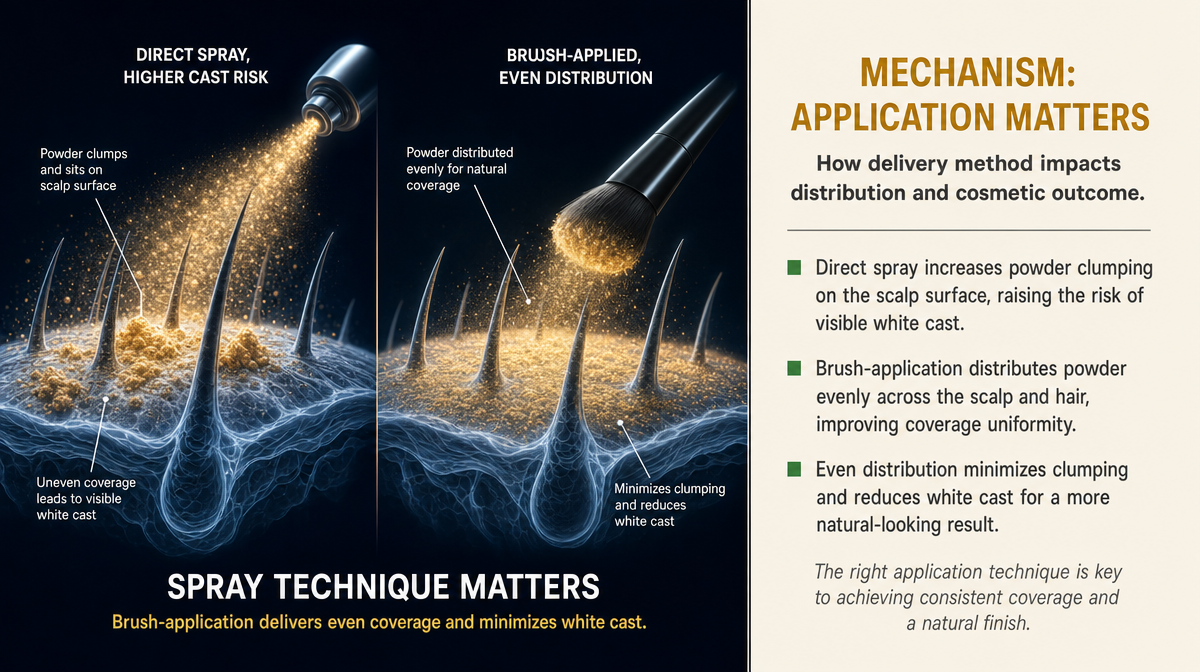
You can predict white cast before you ever leave the shop, or before your next online order arrives, with a simple check. Spray a small amount onto a dark cotton pad or a scrap of dark fabric and rub it in with your fingers after five seconds. If it disappears completely into the fabric, it will likely blend into most hair colours once brushed through. If it sits as a visible pale film, it will do the same on your roots, particularly on brunette or black hair.
A second version of this test uses your own hairbrush. Spray onto the bristles rather than directly onto your scalp, tap off the excess, then work the brush through your roots. This gives you more control over the amount deposited and avoids the classic mistake of spraying too close and too heavily, which is the single biggest cause of visible cast, more than the formula itself.
Many brands now sell tinted versions for brunette or dark hair, using a small amount of iron oxide pigment to match the powder tone. These genuinely help, but they are not magic. They still need brushing through properly, and they still won’t disappear on very dark or jet black hair without a longer wait and a thorough brush-out.
Application Technique: Why More Product Makes It Worse
The most common mistake isn’t buying the wrong formula. It’s spraying it wrong. Holding the can too close (under 15 centimetres) concentrates the powder in a small area, guaranteeing a visible patch rather than an even dusting. Most manufacturers recommend a distance of around 20 to 25 centimetres, moving the can in short passes rather than holding it still over one spot.
The second mistake is skipping the wait. The powder needs a short period, generally one to two minutes, to actually absorb oil before you touch it. Brushing immediately just redistributes wet powder rather than oil-saturated powder, which is part of why some people report a paste-like residue.
The third mistake is under-brushing. A thorough brush-out, working from roots to ends in small sections, removes the majority of visible powder while leaving the absorbed oil control in place. Fingers alone rarely do this job as well as a natural bristle brush, which distributes the product along the hair shaft rather than just scattering it further.
A rough self-test: after applying, run a clean white tissue lightly over your part line. If it comes away with a visible chalky residue, you’ve either used too much or haven’t brushed through for long enough. Adjust one variable at a time rather than assuming the product has failed you.
How To Judge Whether It’s Actually Working
Judge results by touch and by time, not by smell. Run two fingers along your part line about four hours after application. If the hair still feels slightly matte and dry to the touch rather than slick, the product is doing its job. If it feels oily again within an hour or two, either the application was too light, or the formula’s absorption capacity is genuinely lower than your scalp’s oil output, which happens with very oily scalps regardless of brand.
Most dry shampoos are formulated to manage oil for somewhere between six and ten hours under normal conditions, according to the same 2019 sebum absorption research mentioned earlier, though heat, humidity, and exercise all shorten that window. If you’re finding you need to reapply within two or three hours consistently, that’s useful information about your own scalp, not necessarily a product failure.
A fair trial takes more than one use. Give a formula three to four separate applications across different hair states (freshly washed day two, day three, day four) before judging it, because oil absorption performance genuinely varies with how much sebum is already present. Testing it once on very greasy day-four hair and once on barely-oily day-one hair will give you two different impressions of the same can.
Build-up, Scalp Health, And When You Actually Need To Wash
The itching and flaking people often blame on dry shampoo is usually build-up, not an allergic reaction to the formula itself. Repeated applications without washing leave layers of starch or clay sitting on the scalp, which can trap sweat and skin cells and, for some people, contribute to irritation over several consecutive days.
General scalp care guidance from the Australasian College of Dermatologists notes that scalp skin, like facial skin, benefits from regular cleansing to remove accumulated product and sebum, and that persistent itching or flaking that doesn’t resolve with normal washing is worth raising with a general practitioner or dermatologist rather than managing indefinitely with styling products. That’s sound, general advice, not specific to any brand or formula.
As a practical rule, most hairdressers and trichologists suggest treating dry shampoo as a bridge between washes, not a replacement for washing. Two to three days between full washes, using dry shampoo on the days in between, tends to keep both oil control and scalp comfort manageable for most hair types. Very oily scalps may need to wash more often regardless of how good the product is; very dry, coloured, or curly hair can often stretch washes further with less dry shampoo needed at all.
Aerosol, Loose Powder Or Paste: What The Format Actually Changes
The three common formats each change how the product behaves, not just how it feels to use. Aerosols disperse powder in a fine, even mist, which generally gives the most even application and the lowest risk of visible clumping, but they use propellants that some people prefer to avoid for sensitivity or environmental reasons.
Loose or pressed powders, applied with a brush or directly by hand, give you more control over exact placement, which suits people targeting a specific oily patch rather than the whole head, but they take longer to apply evenly and are easier to overuse.
Paste or foam versions, a newer format, are designed to be worked in like a styling product rather than dusted on, and they tend to leave the least visible residue on dark hair, though they generally offer shorter oil control windows than powder-based aerosols because there’s simply less absorbent material per application.
None of these formats is objectively superior. The right one depends on your hair colour, how much oil you’re managing, and how much time you have in the morning. A rushed 7am routine usually favours the aerosol’s speed; a considered evening touch-up before an event might suit the precision of a loose powder instead.
What’s Genuine Innovation And What’s Just Packaging
Consumer testing bodies such as CHOICE have long noted, across categories from sunscreen to shampoo, that ingredient lists and independent lab measurements tell a more reliable story than front-of-pack claims. Dry shampoo is no exception. Terms like “clinically proven”, “salon-grade” or “instant refresh” have no regulated meaning in Australia and can be printed on a can regardless of what testing, if any, sits behind them.
Genuine differences worth paying attention to are the base ingredient (starch versus clay versus modified starch), the presence of tinting for dark hair, the propellant type if you have sensitivities, and added actives such as niacinamide or panthenol, which may support scalp comfort but do not materially change oil absorption.
Everything else, the fragrance notes, the packaging colour, the celebrity endorsement, is a purchasing decision about experience, not performance. There’s nothing wrong with choosing a product because you love the scent. Just know that you’re choosing it for that reason, not because it will control oil any better than a plainer, cheaper alternative with the same starch base.
Key Takeaways
Dry shampoo absorbs oil, it does not clean hair, so judge it on oil control and cast, not on scent. Match the base ingredient and any tinting to your hair colour before worrying about brand reputation. Apply from a distance, wait before brushing, and brush thoroughly rather than relying on fingers. Treat it as a bridge between washes, not a replacement for washing, and see a doctor if scalp irritation persists beyond a few days of normal washing.
A Quick Checklist Before You Buy
- Check the first three ingredients: starch, clay, or modified starch
- Look for a tinted formula if you have dark or black hair
- Do the dark-fabric spray test if you can, in store or at home
- Plan to hold the can 20 to 25 centimetres from your scalp
- Wait one to two minutes before brushing through
- Reassess oil control after three to four separate uses, not one
- Wash out build-up every two to three days regardless of the formula
This article is general information only and does not replace personal advice from a dermatologist or GP.
Individual results vary depending on scalp type, hair colour and how a product is applied.