
Dr. Anthony Reeves, Senior Health and Science Editor.
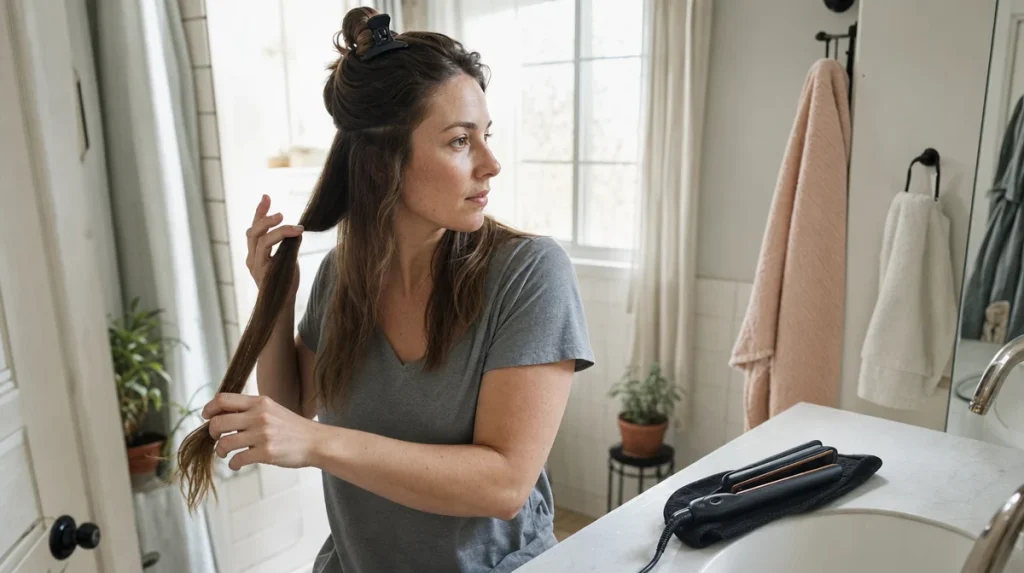
You stand at the mirror with the straightener already hot, running it through the same section for the third time, wondering why the ends still flip out the way they did an hour ago. On the shelf behind you sits a heat protectant you bought last winter, half used, next to a serum you are not sure does anything. The question you type into your phone later that night is usually some version of ‘why does my hair straightener not work as well as it used to’. The most likely answer has nothing to do with the tool. A 2019 review in the Journal of Cosmetic Science found that hair strand temperature at the moment of contact, not appliance wattage or price, determines the degree of structural change that produces sleek, flat hair, and that most people never get their hair to that temperature because of how they section and pass it through the plates.
- Temperature at the hair matters more than the number on the dial – the same setting behaves differently depending on hair thickness, moisture and colour treatment.
- One slow, deliberate pass beats five quick ones – repeated passes add cumulative heat exposure without adding extra smoothness.
- Plate cleanliness and even heat matter more than the coating name on the box – a clean, evenly heated ordinary plate can outperform a premium-labelled one with uneven recovery.
Why The Same Straightener Behaves Differently On Different Days
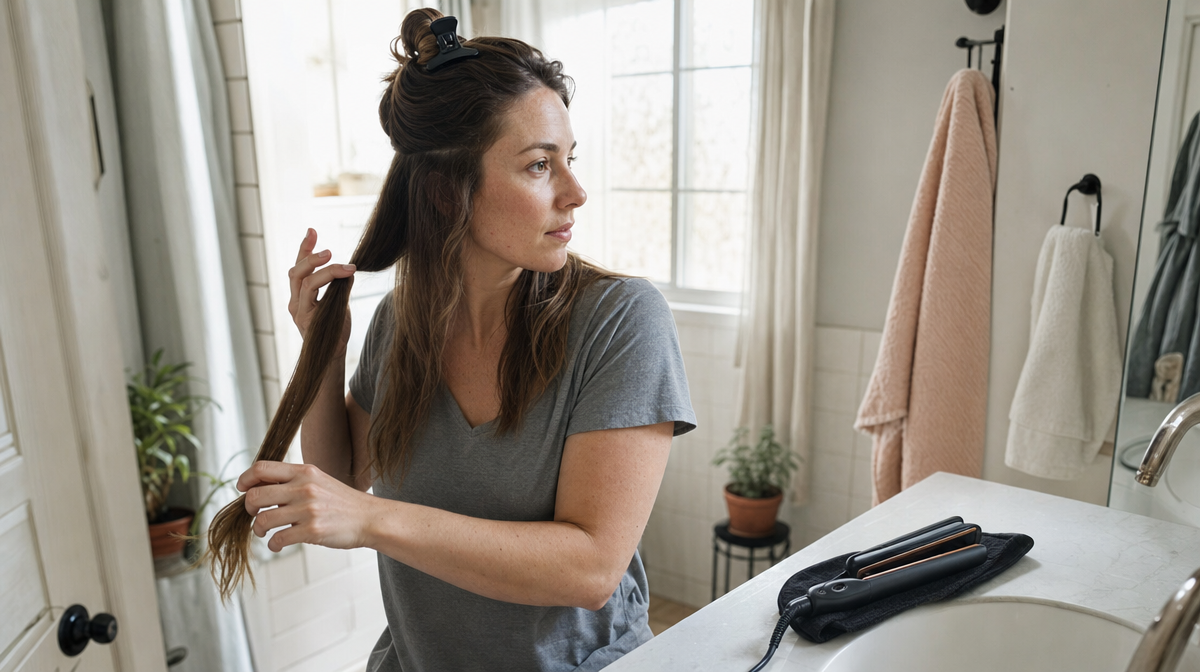
Two people can own the identical straightener and get completely different results, sometimes the same person on two different mornings. The tool has not changed. The hair has.
Hair holds a variable amount of water depending on the weather, how it was washed, and what products sit on the strand. Applying heat to hair that still carries hidden moisture is a bit like ironing a shirt that looks dry but is faintly damp: the iron has to spend its energy turning that moisture to steam before it can do anything to the fibre itself. That wasted energy is why a straightener can feel hot enough and still fail to smooth hair on a humid day.
A 2019 review in the Journal of Cosmetic Science noted that hair carrying elevated internal moisture required measurably more pass time at the same plate temperature to achieve an equivalent reduction in curl, and that repeated attempts on under-dried hair increased surface damage without improving the result.
The practical fix is unglamorous: dry hair fully, including the roots, before any hot tool touches it. Not ‘almost dry’. Fully dry, ideally with a light cool-shot pass at the end to close the cuticle. Self-test: run your fingers through a straightened section right after styling. If it feels slightly spongy rather than smooth and dry, moisture is still trapped and the straightener was working against you, not with you.
Setting The Right Temperature For Your Hair, Not The Highest One
Every straightener has a temperature dial, and almost everyone treats the highest number as the setting that means business. That instinct is backwards.
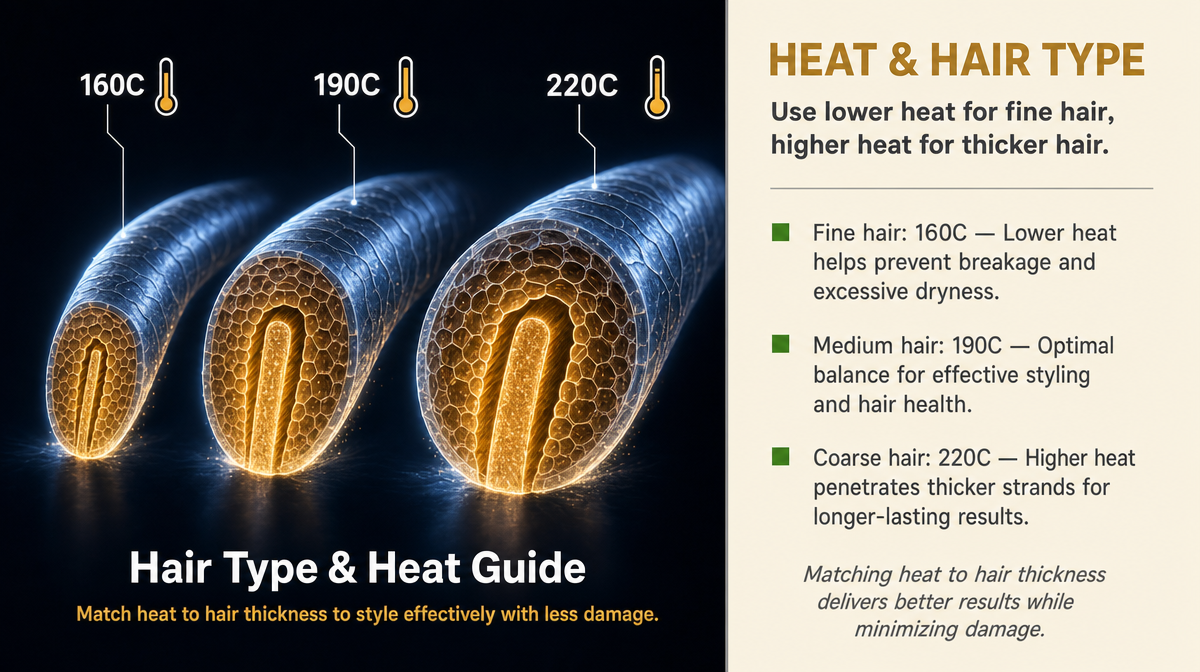
Hair is reshaped when heat temporarily loosens the hydrogen bonds holding the strand’s structure in place, allowing it to be flattened before it cools and resets. Fine hair reaches that state at a relatively low temperature, somewhere in the 160 to 180 degree Celsius range. Medium hair generally needs 180 to 200 degrees. Coarse, very curly or chemically treated hair often needs 200 to 220 degrees to achieve the same structural change, simply because the strand is thicker and the bonds sit deeper.
Setting fine or damaged hair to the top of the dial does not straighten it any faster. It just adds heat the hair does not need, which shows up later as dullness or breakage.
The self-test worth doing before committing to a setting: take one small, hidden section underneath and pass the straightener through once at what you think is the right temperature. If it needs a second or third pass to lie flat, move the dial up in small increments rather than jumping to maximum. If it smooths on the first pass and feels slightly crisp rather than soft afterwards, the setting is already a touch too high.
Adjust always. The number that worked for your hair last winter may not work for it now, particularly after colour treatments, which change how the strand holds heat.
Sectioning Properly So Every Strand Gets Even Heat
Sectioning is the least glamorous part of straightening and the part most people rush.
The plates on most straighteners are between two and five centimetres wide. Grabbing a chunk of hair wider than that means the outer layers get direct plate contact while the hair buried in the middle barely feels the heat at all. The visible result is a straightener that seems to work on the surface while the underlying layers keep their original wave.
Working in sections no wider than the plate itself, clipped up and released one at a time, means every strand in that section gets even, direct contact. It takes longer. It also means fewer repeat passes later, because the job gets done properly the first time.
A simple system: divide hair into four sections, top and bottom, left and right, then take horizontal sub-sections no thicker than one centimetre from each as you work down. Clip the rest out of the way with sectioning clips rather than trying to hold it back with your free hand, which almost always lets stray pieces fall into the hot plates unintentionally.
The Single, Slow Pass
There is a common belief that if one pass does not fully smooth a section, running the straightener through again and again will eventually finish the job. Sometimes it does. It also adds heat exposure each time, and that exposure is cumulative.
Hair does not reset between passes the way skin recovers between periods of sun exposure. Each pass at the same temperature adds to the total thermal load the strand has absorbed in that session. A single slow, deliberate pass, held for roughly two to three seconds per section, transfers enough heat to reshape the hair without repeating that load five separate times.
If a section is not smoothing after one unhurried pass, the more useful response is to check the section width, which may be too thick, or the temperature, which may be too low, rather than repeating the same pass at the same settings and hoping for a different outcome.
Mistake to watch for: styling in a hurry and dragging the straightener quickly through a wide section multiple times because it feels faster. It is not. A slower single pass through a properly sized section usually takes less total time than the multiple-pass approach and leaves noticeably less frizz the next morning, because the hair has not been repeatedly heated and cooled in the same spot.
Reading The Plate: What Actually Matters Versus What Is Marketing
Plate coatings get most of the marketing attention: ceramic, titanium, tourmaline, and various proprietary blends. The material does affect how evenly heat spreads across the plate surface, but it is not the deciding factor most advertising suggests.
Public appliance testing work, including comparative testing carried out by CHOICE over the years, has repeatedly found that heat consistency across the plate and how quickly a plate recovers its temperature after each pass matter more for the finished result than the specific coating named on the box. A straightener with an ordinary coating that holds a stable, even temperature across its full plate length will generally outperform one with a premium-sounding coating and uneven heat recovery.
What is worth checking, regardless of the coating: run a section through slowly and feel for hot or cool patches along the plate length. Inconsistent heat usually shows up as one part of a section smoothing while another part, further from wherever the heating element sits, stays wavy.
The practical takeaway is not to ignore plate quality. It is to stop assuming a named coating guarantees performance and to judge the tool by how evenly it actually behaves on your hair, which no label on the box can tell you.
Preparing Hair So The Tool Has Less Work To Do
A straightener does less damage when hair arrives at it already in good condition, and most of that preparation happens before the tool is ever switched on.
General guidance from dermatology bodies on heat styling is consistent: repeated direct heat on hair that is dry, brittle or chemically compromised increases the likelihood of visible breakage and split ends, and using a heat protectant reduces but does not eliminate that risk. Applying protectant evenly through the mid-lengths and ends, not just spraying the surface, gives the strand a more even barrier before heat is applied.
Drying hair with a nozzle attachment pointed downward, following the direction of the cuticle, leaves the surface smoother before the straightener even touches it, which in practice means fewer passes are needed afterwards.
Brushing hair thoroughly beforehand, so there are no small knots hidden in a section, matters more than most people expect. A straightener run over a hidden knot concentrates heat and pressure on that one point rather than distributing it evenly, and that is a common, invisible cause of localised breakage people later blame on the tool itself.
Judging Results Honestly: Same-day Shine Versus Next-day Frizz
The real test of a straightening technique is not how hair looks in the bathroom mirror immediately afterwards. It is how it looks the next morning.
Overheated or overworked hair can look glassy and flat straight after styling and then frizz noticeably within a few hours, because the surface cuticle has been damaged rather than simply smoothed. Hair straightened at the right temperature, in properly sized sections, with a single unhurried pass, tends to hold its shape for longer and shows less frizz regrowth as the day goes on, because the cuticle has closed cleanly rather than been roughened.
A fair self-test: photograph your hair in natural daylight straight after styling, then again the next morning before washing. If the difference is dramatic, with noticeable frizz or flyaways appearing overnight, the technique used the day before was likely too aggressive for that hair, regardless of how sleek it looked at the time.
Judging results this way, over a full day rather than in the first ten minutes, gives a much more honest picture of whether a technique is working with the hair or simply forcing a temporary shape onto it.
Mistakes That Undo Otherwise Good Technique
A handful of habits undo otherwise reasonable technique.
Clamping the plates too tightly at the root and dragging down creates a crease line partway down the strand, visible as a kink once the rest of the hair has relaxed. A firm, even grip works better than a hard squeeze.
Holding the straightener at an angle rather than flat against the section means one plate makes full contact while the other barely touches the hair, which explains uneven results on hair that looks straightened on one side and slightly wavy on the other.
Going back over a section that has already cooled, rather than while it is still warm, effectively restarts the heating process on hair that has just been through one heat cycle, doubling the exposure for no real gain.
Styling hair that is still slightly damp, discussed earlier, remains the most common mistake of all, and the one most likely to cause visible steam damage, sometimes described as bubble hair, where trapped moisture boils inside the strand and weakens it from within.
Keeping The Plates Working The Way They Did On Day One
A straightener performs consistently only if the plates stay clean. Styling product, whether serum, spray or dry shampoo residue, builds up on the plate surface over weeks of use and creates a thin insulating layer between the plate and the hair.
That residue reduces how efficiently heat transfers, which is often the real reason a straightener that used to work well in one pass starts needing three or four. Wiping the plates with a barely damp cloth once they have fully cooled, roughly once a fortnight with regular use, restores much of the original performance without any change to technique or temperature.
Checking the plates for small nicks or rough patches is worth doing at the same time. A damaged plate surface can catch and snag hair rather than gliding over it smoothly, and that snagging is a common, overlooked cause of breakage people mistake for a heat problem.
Storing the tool in a heat-resistant pouch rather than tossing it loose into a drawer also protects the plate surface between uses, which matters more over a year of regular use than most people assume.
Key Takeaways
- Dry hair fully before straightening. Trapped moisture wastes heat and forces repeat passes.
- Match temperature to hair thickness, starting low and testing on a hidden section rather than defaulting to maximum.
- Section no wider than the plate itself, so every strand gets direct, even contact.
- Use one slow, deliberate pass rather than several quick ones. Repeated heat adds up.
- Judge results the next morning, not just straight after styling.
- Clean the plates regularly. Product build-up quietly reduces how well heat transfers.
A Quick Checklist Before You Switch On The Straightener
- Hair completely dry, brushed through, no hidden knots
- Heat protectant applied evenly through mid-lengths and ends
- Temperature set for your hair’s thickness, not the highest available
- Sections no wider than the plate
- One slow pass per section, held flat against the hair
- Plates wiped clean of product residue within the last two weeks
This article is general information and does not replace professional hairdressing or dermatological advice.
Individual results vary with hair type, styling history and technique.