
Dr. Anthony Reeves, Senior Health and Science Editor.
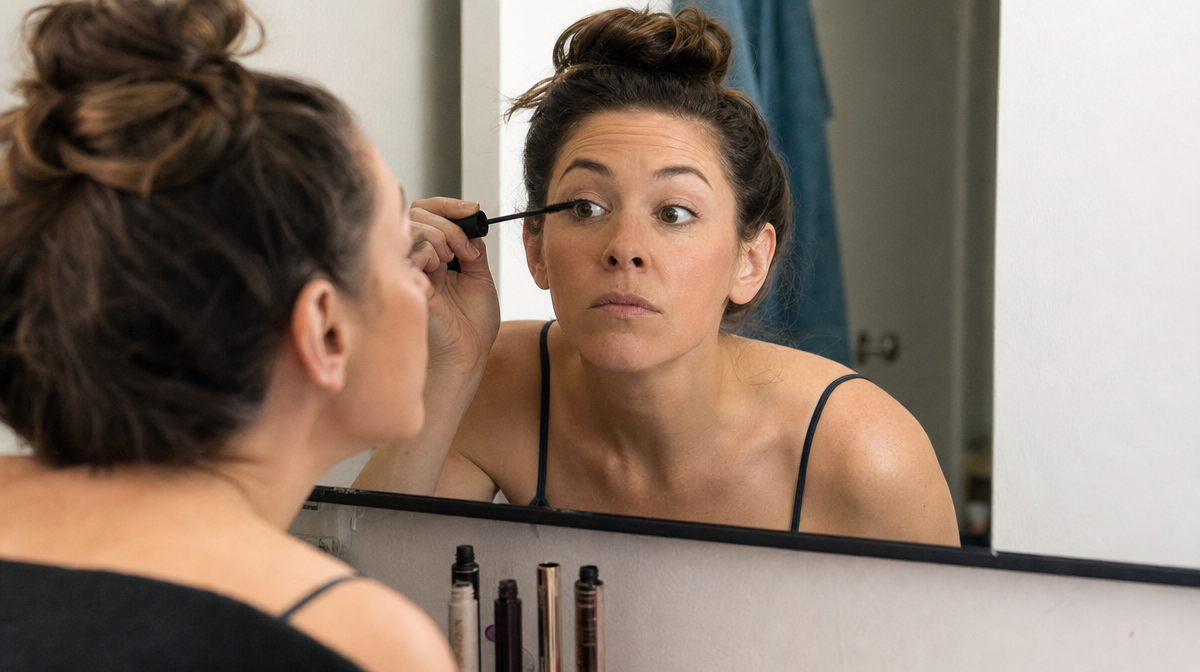
You are standing at the bathroom mirror at 7.15 on a Tuesday, wand in hand, doing that little wiggle at the base of your lashes and hoping for volume that never quite arrives. By 11am the flick has folded flat and there is a faint smudge under one eye. Somewhere in the bathroom drawer sit four other tubes, all promising the same lush, doll-lash effect, all abandoned half-used. If you have ever typed “why does my mascara look clumpy by midday” into a search bar, this is for you. The short answer: most volume problems are not really about the formula in the tube. They are about how it is applied, stored and removed. One fact worth knowing before anything else: mascara begins drying the moment air reaches it, not when you finally get to the ends of your lashes, so the first stroke you apply is already working against a small clock.
- Wand shape matters more than the marketing name: a tight, tapered brush builds length, while a fuller, bristled one is what actually pushes volume into fine lashes.
- Air, not old age, ruins most tubes: pumping the wand in and out forces oxygen inside and dries the formula weeks before the use-by date.
- Three thin coats beat one thick one: volume comes from layering and drying time, not from loading the wand and hoping.
Why Lashes Look Flat By Lunchtime
Lashes are not static rods. Each one has a natural curl, a small amount of oil at the root, and the constant micro-movement of blinking, roughly 15,000 times a day. Mascara sits on top of this moving surface like a coat of paint on a door that keeps opening and closing. It will crack at the hinge points first.
The hinge point on a lash is the base, closest to the lid, where oil production is highest and where the lash flexes most with every blink. This is why volume seems to collapse there before anywhere else. A 2021 study in the International Journal of Cosmetic Science measured lash-coating adhesion over an eight-hour wear period and found the greatest loss of pigment and polymer occurred within two millimetres of the lash line, largely attributed to sebum transfer and blink friction rather than formula breakdown.
Understanding this changes what you fix. Reapplying more mascara mid-morning does not solve a base problem. Nor does switching brands each season, chasing a formula that claims to be transfer-proof. The base needs a drier, more oil-resistant first layer, and everything after that is finishing work.
Matching The Wand To The Job, Not The Packaging
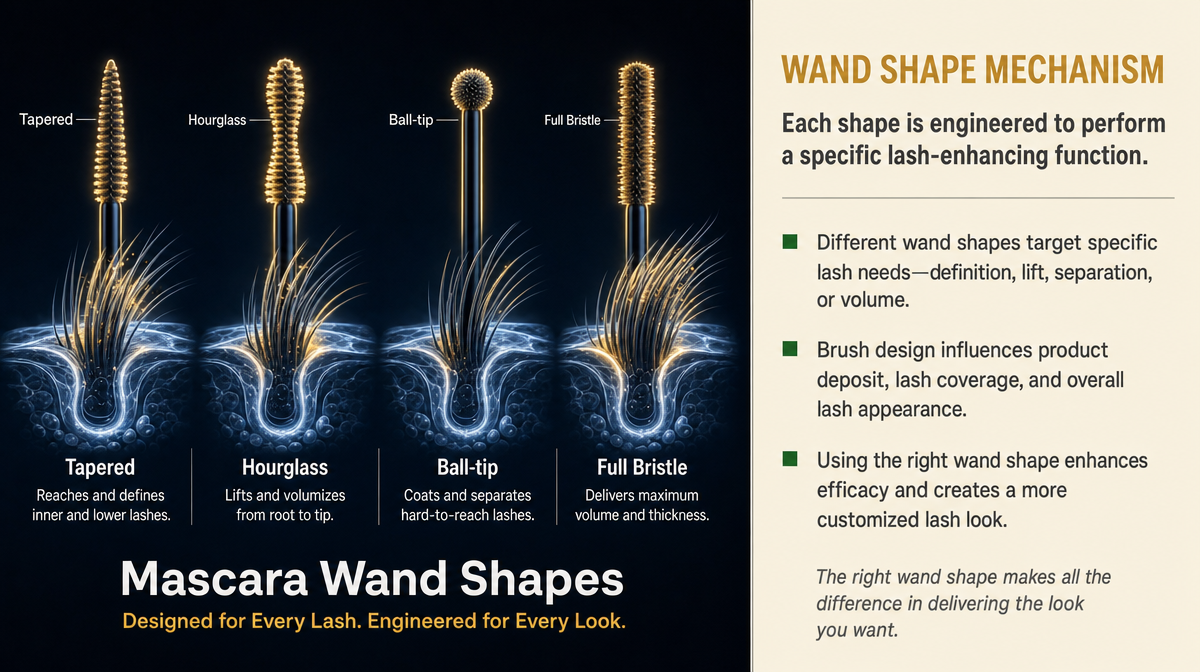
Every wand on the market is trying to do one of three jobs: separate, lengthen or volumise, and most people are using the wrong one for what they actually want.
A tight, tapered plastic wand with fine, closely spaced bristles is built for separation and length. It threads through lashes without depositing much product, which is exactly why it never delivers thickness no matter how many coats go on. A rounder, fuller brush with longer, densely packed bristles is built to deposit more formula per stroke, which is what volume actually requires.
Think of it the way you would think about paint rollers. A fine foam roller gives an even, thin coat, ideal for a smooth finish. A thick nap roller loads far more paint per pass and is what you reach for when you want full coverage in fewer strokes. Neither roller is better. They are built for different walls.
A quick self-test: hold the wand up to the light before buying or using it. If you can see clear gaps of plastic between the bristles, it is a separating wand. If the bristles look dense enough that you cannot see the core easily, it is built for volume. Reading the wand takes ten seconds and saves months of buying the wrong tube.
The Three-coat Method, Done Properly
Volume is built in layers, the same way a good roast gets its colour from repeated basting rather than one heavy pour of oil at the start.
Apply the first coat while lashes are completely bare, wiggling the wand gently at the root and drawing upward and out in one motion. Wait roughly 30 seconds. This pause matters more than most people realise, because a wet second coat applied over a wet first coat simply blends the two into a heavier, clumpier single layer rather than adding a distinct one.
The second coat should focus on the outer two thirds of the lash, where most of the visual lift happens. The third, if used, should be a light pass focused only on the centre lashes, which are usually the longest and give the most impact for the least product.
A common mistake is loading the wand heavily for a single pass, assuming more product equals more volume. In practice this usually creates weight without structure, and lashes droop within hours rather than holding a curl. Thin, dried layers hold their shape considerably longer than one thick, wet one, because each dried layer adds rigidity the way cardboard sheets glued and dried in stages make a stronger box than one thick, soggy sheet.
Curling At The Right Moment, Not The Wrong One
The order of curling and mascara changes the result more than the curler itself does.
Curling after mascara has fully dried risks snapping the coating, since dried polymer is rigid and does not bend the way a natural, uncoated lash does. Curling before any product is applied, on bare lashes, sets the shape while they are still flexible, and mascara applied afterward locks that curl in rather than fighting it.
Heated lash curlers, increasingly common in Australian bathrooms, work on the same principle as heat styling hair: gentle warmth relaxes the protein structure of the lash temporarily, allowing it to hold a new shape as it cools. The Australasian College of Dermatologists’ general public guidance on eye area care notes that any heated tool used near the eyes should be tested for temperature and used briefly, given how thin and sensitive the skin is in that area.
A simple self-test: curl one eye only, apply mascara to both, and compare at the end of the day. Most people are surprised by how much longer the curled side holds its lift, which tells you whether your current routine is skipping a step worth keeping.
Where Clumping Actually Starts, And It Is Rarely The Tube
Clumping is usually blamed on a bad formula, but the more common cause is what happens before the wand ever reaches your lashes.
Pumping the wand in and out of the tube to “load” it feels productive but does the opposite. Each pump pushes air into the tube, and air is what oxidises and thickens mascara well before its printed use-by date, typically three months from first opening according to general cosmetic safety guidance. A thickened formula clumps not because it is old in years, but because it has been aerated dozens of times a day for weeks.
Wiping the wand once against the rim of the tube before application removes the excess without introducing air, and does more to prevent clumping than switching brands ever will.
A second, less obvious cause is layering mascara over primer or setting spray that has not finished drying. Wet products mixing on the lash line create a soft, unstable film that clumps as it dries unevenly. Waiting the full drying time stated on any base product, usually printed in small text on the packaging, avoids this entirely.
Removing Mascara Without Stripping The Lashes Bare
How mascara comes off at night affects how it goes on the next morning, because lashes stripped of natural oil become brittle and shed more readily, leaving fewer lashes to work with.
Rubbing at waterproof formula with a dry cotton pad is the equivalent of scrubbing a stuck saucepan with a dry sponge: it takes more force than the job needs and damages the surface underneath. An oil-based remover or a damp micellar pad, held against closed lashes for several seconds before wiping, allows the product to dissolve rather than requiring friction to lift it off.
CHOICE has previously tested household and micellar cleansing products for general effectiveness, and its published consumer guidance recommends checking for gentle, fragrance-light formulas around the eye area given how easily this skin is irritated. That guidance is a reasonable starting point for anyone unsure what to look for on a label.
Lashes that are pulled at rather than dissolved tend to fall out at the root over time, which is one of the more common, and most avoidable, causes of lashes looking sparser by the following morning, long before volume from any mascara becomes the real issue.
Storage Habits That Quietly Kill Volume
A mascara tube stored upright in a hot bathroom, next to a shower that runs steam for ten minutes daily, ages faster than the same tube kept in a cool drawer.
Heat and humidity soften the wax and polymer structure that gives volume its hold, the same way chocolate left in a warm car loses its snap. Once that structure softens repeatedly through heat cycles, even a fresh-looking tube will apply unevenly and clump sooner than expected.
Storing mascara horizontally, on its side, also helps prevent the formula pooling and drying at the tip of the tube, which is often the first part to clog and drag against lashes on application.
Most people are more consistent about checking a moisturiser’s use-by date than a mascara’s, yet mascara sits closer to the eye and is opened and closed daily, introducing bacteria each time. General cosmetic safety advice suggests replacing mascara every three months regardless of how much product remains in the tube, not because the volume drops off a cliff at day 91, but because the risk profile changes well before the tube looks empty.
Key Takeaways
Volume problems are usually application problems, not formula problems. The wand shape you choose matters more than the name on the box. Thin, dried layers outlast one heavy, wet coat. Curl before product, not after. Air and heat age mascara faster than time on the shelf does, and gentle removal protects tomorrow’s volume as much as tonight’s cleanse does.
A Quick Checklist For Tomorrow Morning
- Check your wand: dense bristles for volume, tapered for length
- Curl bare lashes first, then apply
- Apply three thin coats with a 30 second pause between each
- Wipe the wand on the rim, never pump it in the tube
- Let any primer or spray dry fully before mascara goes on
- Remove with oil or micellar product, holding rather than rubbing
- Store the tube horizontally, away from bathroom heat
- Replace every three months, regardless of how full it looks
This article is general information only and does not replace advice from a qualified skin or eye health professional.
Individual results vary depending on lash type, application habits and product formula.