
Chloe Fenwick, Beauty Editor.
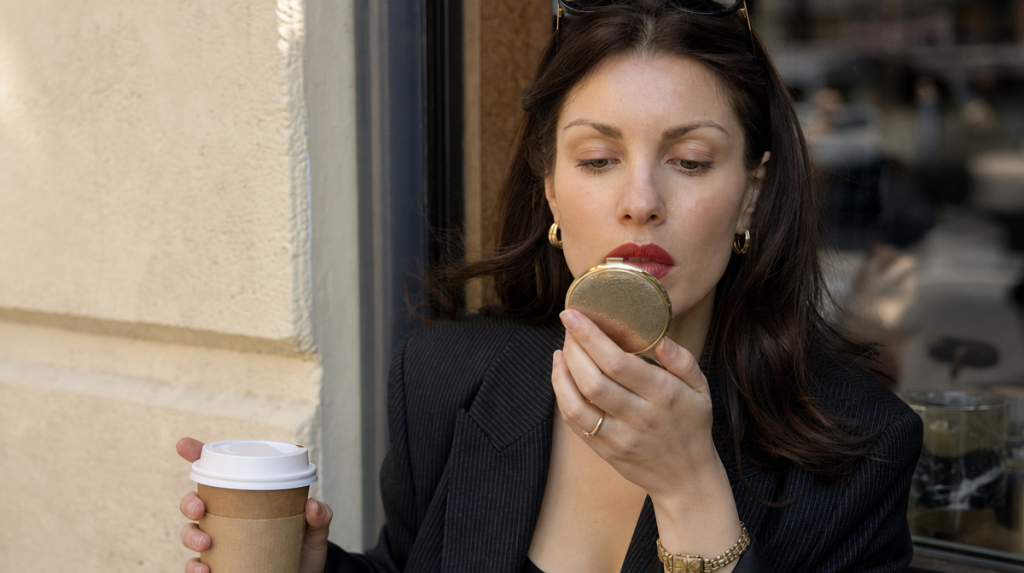
You know the drill. You paint your lips before you leave the house, and by the time you’ve had a coffee and a chat with the barista, there’s a ring left on the cup and a pale patch in the middle of your bottom lip. You go home and look in the bathroom cabinet: nine lipsticks, most half-used, none of them lasting past lunch. So you type the question into your phone anyway, half hoping this time the algorithm has an answer: which lipstick actually stays put.
Here’s the one fact worth knowing before you spend another cent: wear time has very little to do with price and almost everything to do with the film a lipstick leaves behind. A cheap lipstick with a good film-forming formula will outlast an expensive one built on soft oils and pearl pigments. This guide is about learning to tell the difference on the shelf, before you buy, rather than finding out at 2pm with a coffee cup as evidence.
- Transfer resistance and comfort are a trade-off, not a bonus feature: the longest-wearing formulas dry down into a thin film, and that film is what makes them tricky to reapply without removing first.
- The colour on your bottom lip fades before the rest for a physical reason: friction and saliva break the film down from the inside, so patchy centre-fade is normal wear, not a faulty product.
- Reading the first five ingredients tells you more than any marketing claim on the box: silicones and film-forming polymers near the top mean genuine staying power; oils and emollients near the top mean a comfortable but shorter-lived formula.
What “Long-wear” Actually Means At A Chemical Level
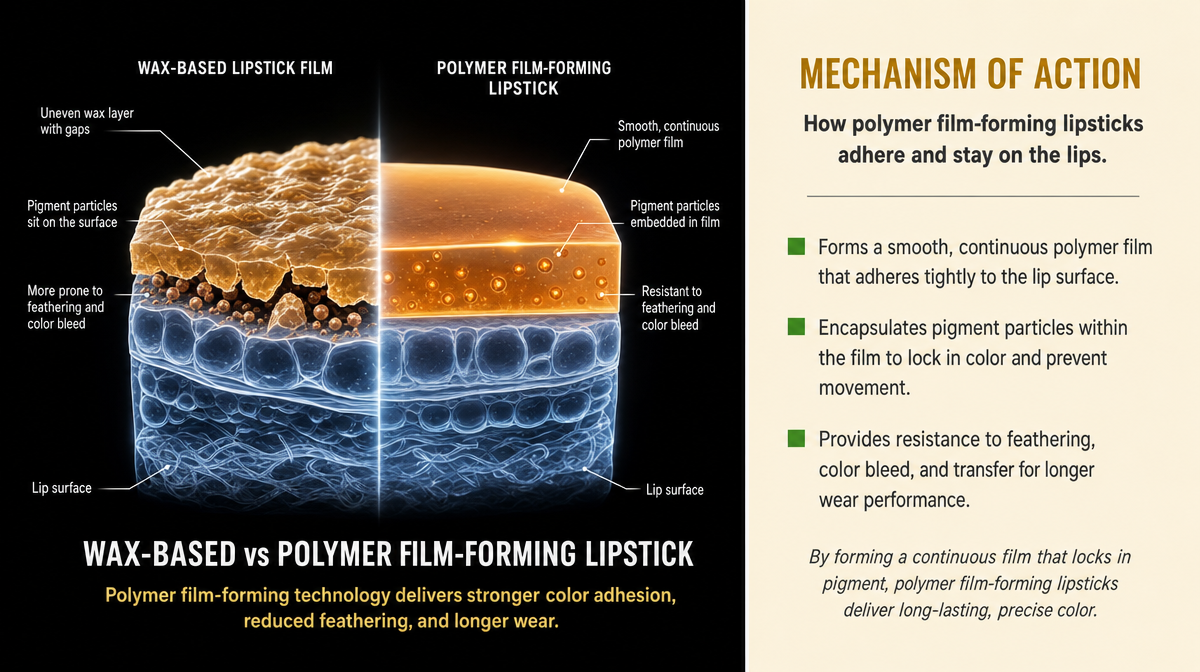
Every lipstick is a mix of pigment, wax, oil and, in long-wear formulas, some kind of film-former: usually a silicone or a synthetic polymer. Think of painting a fence. An oil-based stain sinks in, looks rich, and needs redoing every season. A proper exterior paint forms a skin on top that sheds rain and knocks. Long-wear lipstick works the same way: it isn’t nourishing the lip so much as coating it, deliberately, with something that resists water, oil and friction.
That coating is why long-wear formulas often feel drier on application than a classic satin or cream lipstick. The film needs to set, and setting means the water and volatile solvents in the formula evaporate, leaving the pigment locked to a thin plastic-like layer. A 2021 study in the International Journal of Cosmetic Science measured this directly, tracking colour retention on skin substrates over six hours and finding that polymer-based formulas retained up to 74 per cent more pigment than wax-based formulas over the same period.
Understanding this mechanism changes what you look for on a label. You’re not hunting for “moisturising” or “nourishing”, words that describe the opposite mechanism. You’re hunting for film-forming behaviour, which shows up in ingredient lists as silicones (dimethicone, trimethylsiloxysilicate) or acrylate copolymers.
Reading A Lipstick Label Like A Chemist, Not A Shopper
Ingredient lists on cosmetics are ordered by concentration, highest first, until you drop below 1 per cent, after which brands can order remaining ingredients however they like. That first-five-ingredient rule is the fastest quality check available to any shopper, and it works in a shop aisle as well as it does online.
For long-wear claims specifically, look for one of the following sitting in the first half of the list: dimethicone, trimethicone, VP/VA copolymer, or trimethylsiloxysilicate. Any of these suggests the brand has actually built the formula for wear rather than simply marketing it that way. If the first five ingredients are dominated by oils (ricinus communis, or castor oil, is extremely common) and waxes (candelilla, carnauba) with no film-former in sight, the lipstick may be comfortable and pigmented but is unlikely to survive a meal.
Self-test: next time you’re standing in an aisle, or scrolling a product page with the ingredient list expanded, count the film-forming names in the top ten. Zero means classic formula. One or two means moderate wear. Three or more, particularly near the top, means a genuine long-wear product.
Why The Centre Of Your Bottom Lip Fades First
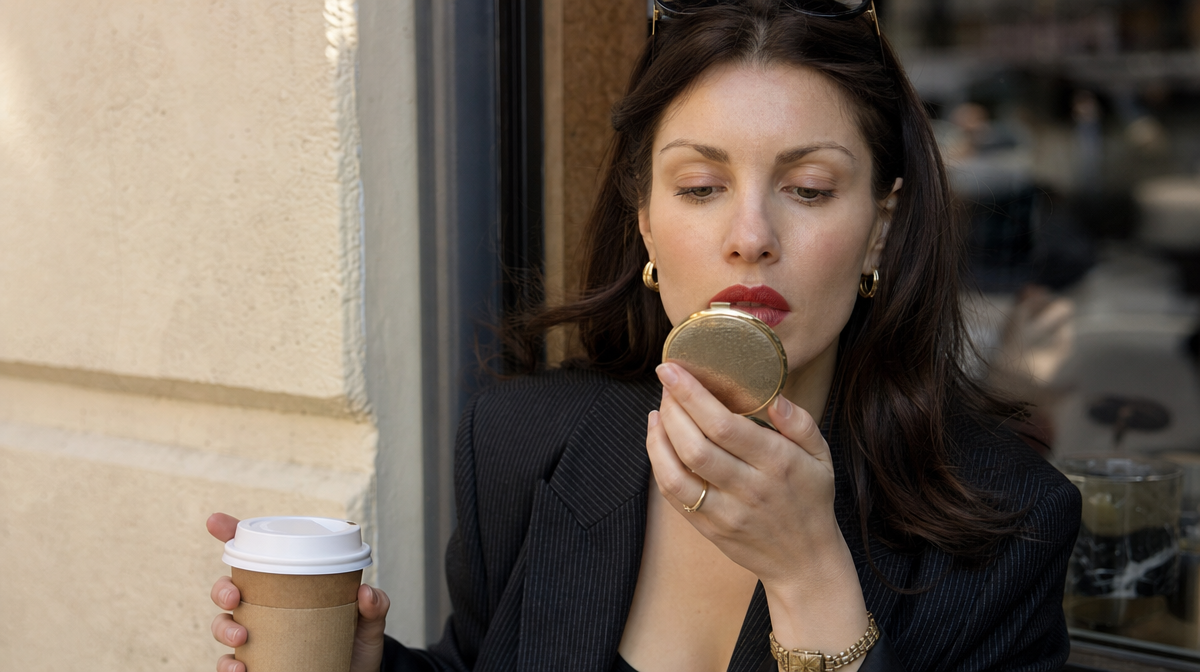
Almost everyone reports the same fade pattern: a clean outer edge and a bare patch dead centre on the lower lip. This isn’t a manufacturing flaw. The centre of the bottom lip takes the most direct contact with cups, cutlery, teeth and saliva, and saliva in particular is efficient at breaking down film-forming polymers through simple mechanical and enzymatic action.
A household comparison: think of a painted skirting board. The section behind a door, rarely touched, keeps its paint for years. The section near a doorknob, touched constantly, needs repainting first. Your lips work the same way, with the centre of the lower lip acting as the doorknob.
Knowing this changes how you judge a lipstick’s real performance. If a product claims 12-hour wear and the outer edges of your lips still show colour at hour eight, that’s the formula doing its job. The centre fading by hour three is expected physics, not proof the product failed. Judge long-wear claims by the outer lip line and by whether reapplication is a full redo or just a light centre touch-up.
The Comfort Trade-off Nobody Puts On The Box
Film-forming formulas resist water and oil, which is precisely why they can feel tight, and why some wearers describe a sensation of the lips being “sealed”. This isn’t damage. It’s the same film doing exactly what it was designed to do, sitting on the lip surface rather than sinking into it.
The trade-off is real and worth naming honestly: the longer a lipstick’s claimed wear time, the more likely it is to feel drying by hour four or five, unless the brand has added emollients specifically to offset it (glycerin, hyaluronic acid, or specific silicone blends designed for slip). A 2020 consumer-perception survey published in the Journal of Cosmetic Dermatology found that 61 per cent of long-wear lipstick users reported some dryness by the sixth hour of wear, compared with 22 per cent of users of standard cream formulas.
This is genuinely a preference decision, not a quality one. If you’re wearing lipstick through a full workday without reapplication, a slightly tighter feel by afternoon may be an acceptable trade for not needing a mirror at your desk. If comfort matters more than duration, a moderate-wear formula with fewer film-formers and more emollients will suit you better, and that’s a legitimate choice, not a failure to find the “right” product.
Undertone Matching In Daylight, Not Shop Lighting
Shop lighting is almost always warm-toned fluorescent or yellow-cast LED, which shifts how pigment reads on skin. A colour that looks like a flattering rose in-store can read orange or ashy the moment you step outside. This is the single most common reason people end up with a drawer of “almost right” lipsticks.
The fix is simple and takes thirty seconds: apply a small amount to the back of your hand or directly to your lips, then walk to a window or, better, step outside for a few seconds. Daylight is a neutral reference point that shop lighting rarely is. If you’re buying online, check whether the retailer offers a true-daylight swatch photo rather than a studio-lit product shot, since studio lighting is frequently warmed deliberately to make skin tones look healthier.
Self-test: hold your phone camera up in natural light with the flash off and take an unfiltered photo of the swatch on your lips. Photos taken this way are far closer to how the colour will actually read to other people across a room than anything seen under indoor lighting.
What Marketing Language Actually Promises, Versus What It Means
Certain phrases on lipstick packaging carry specific, testable meanings, and others carry none at all. “Transfer-resistant” is a real, measurable claim: it means the formula has been tested against fabric or glass transfer under some standard, usually the brand’s own. “Long-wear” and “all-day” are far softer terms with no fixed industry definition, so two products both claiming “all-day wear” can differ by four or five hours in genuine performance.
“Hydrating” long-wear formulas are worth particular scepticism. Hydration and film formation work against each other chemically, so a lipstick that is both genuinely long-wearing and genuinely hydrating usually relies on a small number of specific, more expensive ingredient technologies (certain silicone elastomers, for instance) rather than simple added oils. If the price point is low and the label claims both properties strongly, one of the two claims is likely to be the weaker performer in practice.
The consumer body CHOICE has, in its general cosmetics testing commentary over the years, noted that wear-time claims on packaging are rarely independently verified before sale, which is a useful thing to keep in mind before trusting a number on a box.
How To Judge A Lipstick’s Real Wear Time At Home
You don’t need a laboratory to test wear time meaningfully, just a consistent method. Apply the lipstick as you normally would, blot once, and note the time. Then live a normal few hours: a drink, a light meal, some talking. Check at the one-hour, three-hour and six-hour marks, and take an unfiltered daylight photo each time so you’re not relying on memory or a mirror’s flattering angle.
What you’re looking for isn’t perfection. Even the best long-wear formulas fade at the lip line and centre before the six-hour mark. What separates a genuinely good formula from an average one is how it fades: cleanly, evenly, without flaking or gathering in fine lines, versus patchily, with visible cracking or a chalky residue collecting in the corners of the mouth.
One caution worth flagging plainly: if a lipstick causes persistent stinging, swelling or peeling beyond mild initial tightness, that is a reaction, not a wear characteristic, and the Australasian College of Dermatologists’ general public guidance on cosmetic sensitivity is a reasonable starting point for understanding when a skin reaction warrants seeing a GP or dermatologist rather than switching shades.
Prepping Lips So Any Formula Performs Better
Long-wear formulas grip better on smooth, evenly hydrated skin, and they grip worse on flaky or over-moisturised lips. Too dry, and the film cracks along the flakes within an hour. Too freshly balmed, with product still sitting on the surface, and the lipstick slides rather than bonds.
A reliable routine: exfoliate lips gently once or twice a week with a soft washcloth or a dedicated lip scrub, moisturise with a balm at night, and on the day of wear, apply balm at least fifteen to twenty minutes before lipstick, then blot away any residue with a tissue before applying colour. This gap matters more than people expect: applying long-wear lipstick directly over fresh, un-absorbed balm is one of the most common reasons a supposedly all-day product slides off within the hour.
A thin layer of translucent setting powder pressed lightly over the lipstick, particularly along the inner lip line, can extend wear further by absorbing surface oils the film-former hasn’t fully sealed. It’s a small step but a genuinely effective one, used by makeup artists working under studio lights for hours at a time.
Key Takeaways
Long-wear performance comes down to chemistry, not price. A film-forming ingredient near the top of the list (a silicone or an acrylate copolymer) is a genuine sign of durability. Comfort and duration sit in tension with each other, so the longest-wearing formula is rarely the most hydrating one, and that’s a fair trade rather than a flaw. Test undertone and true colour in daylight, never under shop lighting. Judge fade at the lip line, not the centre, since centre-fade is normal wear from friction and saliva. And a short prep routine, balm well before application, then blot, does more for wear time than most product claims on a box.
A Quick Checklist Before You Buy
- Check the first five ingredients for a film-former (dimethicone, VP/VA copolymer, trimethylsiloxysilicate)
- Swatch and check colour in daylight, not shop lighting
- Decide whether you’re prioritising duration or comfort, since few formulas deliver both fully
- Prep lips: exfoliate weekly, balm at least fifteen minutes before application, then blot
- Judge wear by the outer lip line at the six-hour mark, not by the centre of the bottom lip
- Treat persistent stinging or peeling as a reaction, not a wear trait, and seek advice if it continues
This article is general information only and does not replace advice from a dermatologist or GP.
Individual results and wear times vary with lip chemistry, climate and habits such as eating and drinking.